
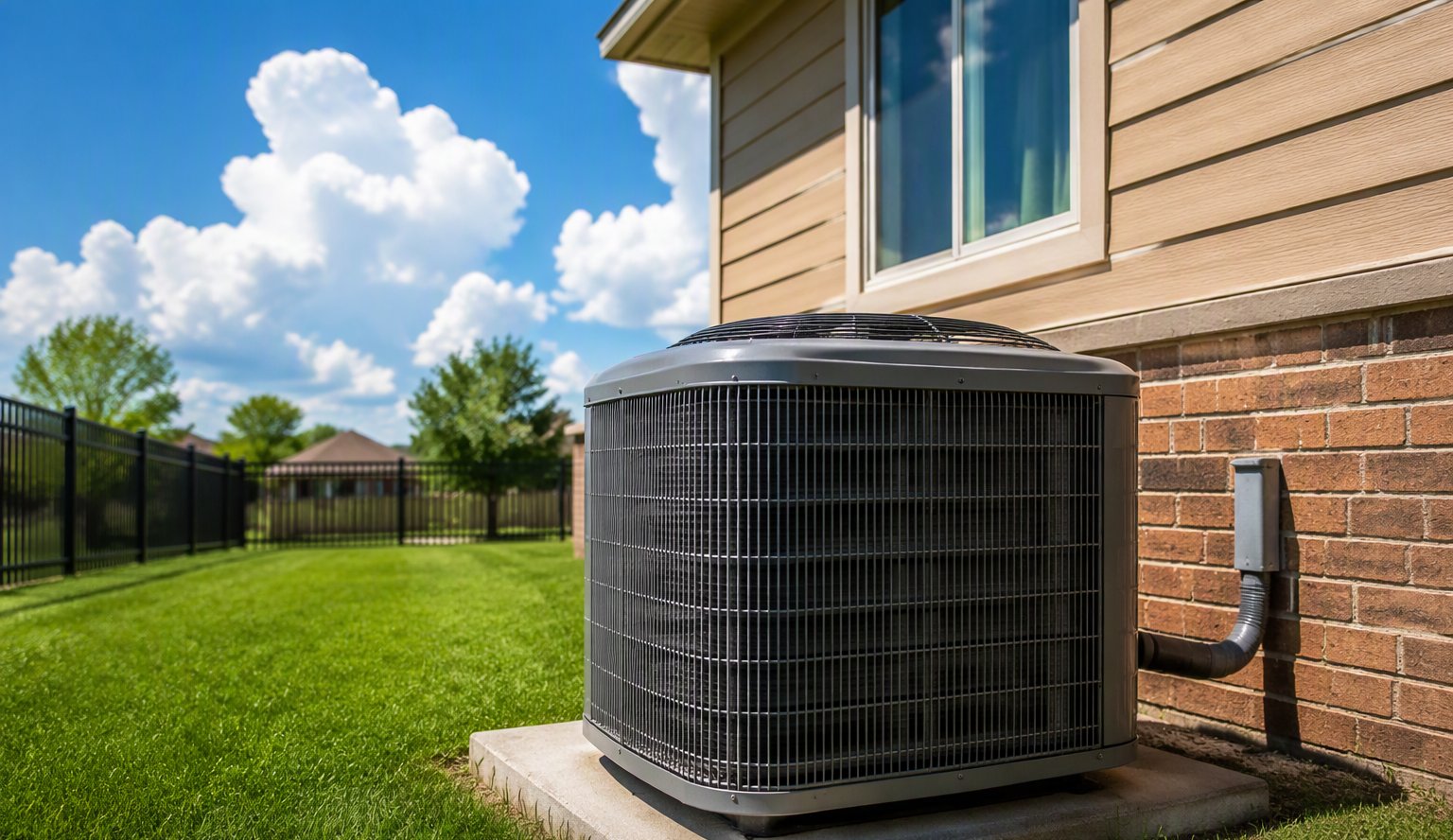
It’s not bad luck, and your AC isn’t spiteful. The first serious heat of a Front Range summer is a stress test that finds every weakness the system developed over winter — all at once, in every house, on the same day. Here’s what’s actually happening.
The stress-test effect
For eight months your AC sat dormant: through freeze-thaw cycles, chinook wind, hail season, and cottonwood season. Then the first 95° afternoon demands full output for hours straight. Weak capacitors, marginal contactors, slow refrigerant leaks — components that might have limped through mild weather fail under that load.
And they fail everywhere simultaneously, which is why the first hot week is the hardest week to get a same-day appointment anywhere in the metro.
The four usual suspects
- Capacitors: the little cylinders that start and run your compressor and fan. Heat and age kill them, and they choose heat to die in. It’s the most common summer failure — and one of the quickest, most affordable repairs when caught.
- Dirty condenser coils: cottonwood fluff mats into the coil like felt. The system can’t shed heat, pressures spike, and safety switches or compressors give up.
- Low refrigerant: a slow leak that was "fine" in May is a frozen coil and zero cooling at 95°. Refrigerant never gets "used up" — if it’s low, it leaked, and the leak needs finding.
- Contactors and wiring: pitted contacts and connections loosened by a winter of vibration fail under sustained high amperage.
What to do the day it dies
- Check the boring stuff first: thermostat on COOL and below room temp, breakers, the outdoor disconnect, the filter.
- Look for ice: frost on the copper lines or the indoor coil means shut it off — running it frozen can kill the compressor, turning a small bill into a big one.
- Call early: on the first hot week, dispatch queues fill by mid-morning. The earlier you call, the sooner the truck.
How to not be part of next year’s rush
A spring tune-up — April or May — tests exactly the components that fail on the first hot day: capacitor strength against spec, contactor condition, refrigerant charge by measurement, coil condition, amp draws. The homeowners who get tune-ups in May are conspicuously absent from the emergency queue in June. That’s not a sales line; it’s the pattern in our own call log.