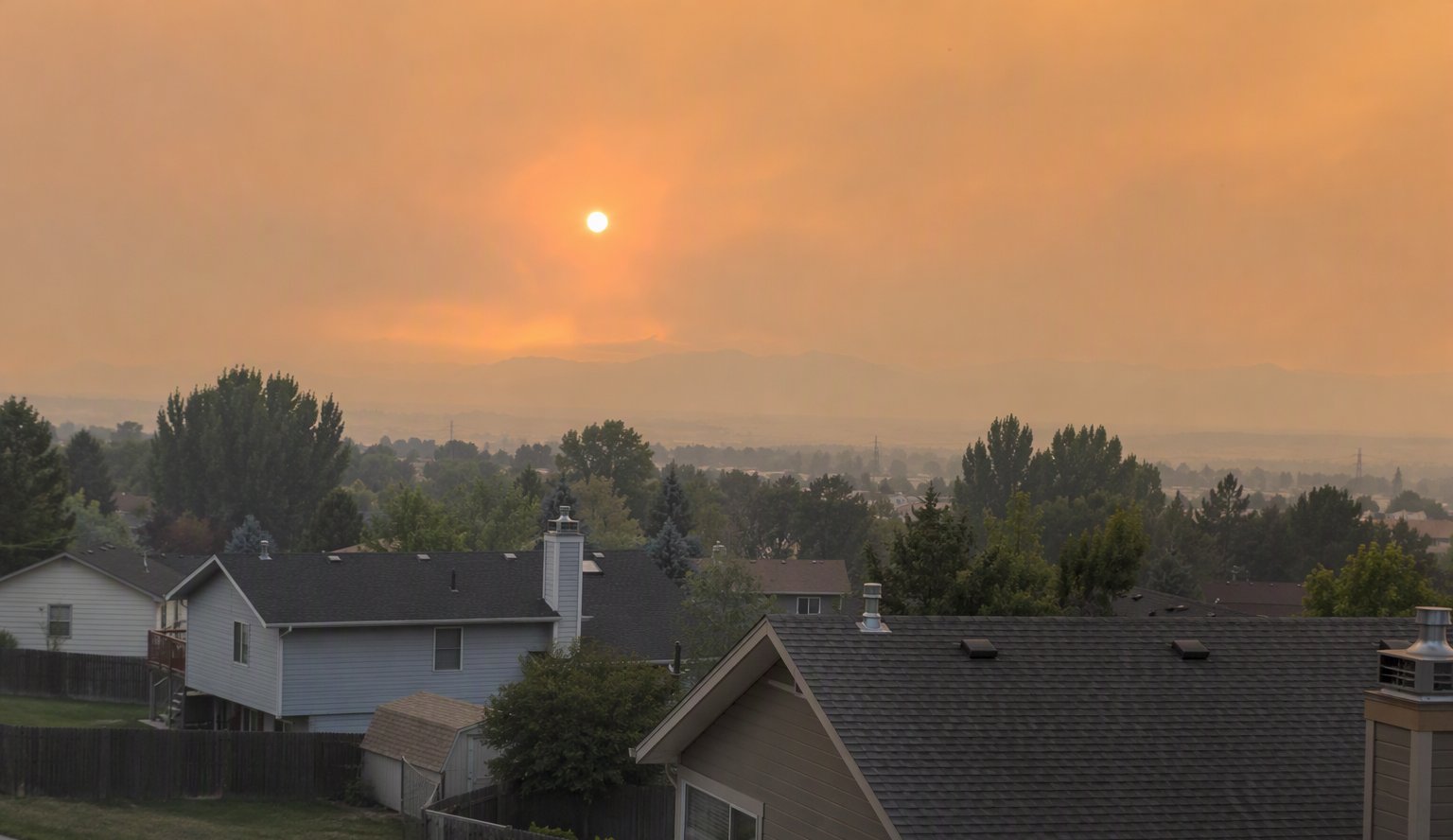
Every summer now, wildfire smoke drifts over the Front Range and parks there for days. You can’t stop the sky — but you can absolutely control what your family breathes indoors, and your HVAC system is the tool that does it.
Seal up, then filter
Step one is boring and essential: windows and doors closed, fireplace dampers shut. Smoke sneaks through gaps you’d never notice on a normal day.
Step two is your system’s filter. The standard 1-inch fiberglass filter stops dust bunnies — it does almost nothing for smoke particles. For smoke season, a MERV 11–13 pleated filter is the meaningful upgrade, provided your system can breathe through it (most can, but very old blowers sometimes struggle — ask us if unsure).
Run the fan — on, not auto
Your system only filters air while the blower is moving. On smoke days, switch the thermostat fan from AUTO to ON so air passes through that upgraded filter continuously. The electricity cost is trivial compared to the difference in indoor air.
One caution: if your system pulls any outside air through a fresh-air intake, that’s the day to close or disable it. Recirculate indoor air; don’t import the problem.
Portable help that actually works
A HEPA room purifier in the bedroom is the highest-value add-on during a smoke event — genuinely effective, unlike ionizers and gimmick gadgets. Size it to the room, run it on high when the AQI is bad, and sleep in the cleanest air in the house.
After the smoke clears
Smoke-loaded filters are done — replace them after a major event, even if they were new. If your home smelled like a campfire for a week, your filter absorbed a week of campfire.
And if smoke season keeps hitting your house hard, it may be time to talk about whole-home filtration or an upgraded media cabinet at the air handler. It’s one of the most-requested upgrades we install now — and one of the few that pays you back every summer.