Every fall it’s the same story: the forecast swings from 70° to 15° overnight, and our dispatch line lights up — dead furnaces, frozen spigots, burst pipes. Most of it is preventable in about an hour. Here’s the checklist.
Outside the house
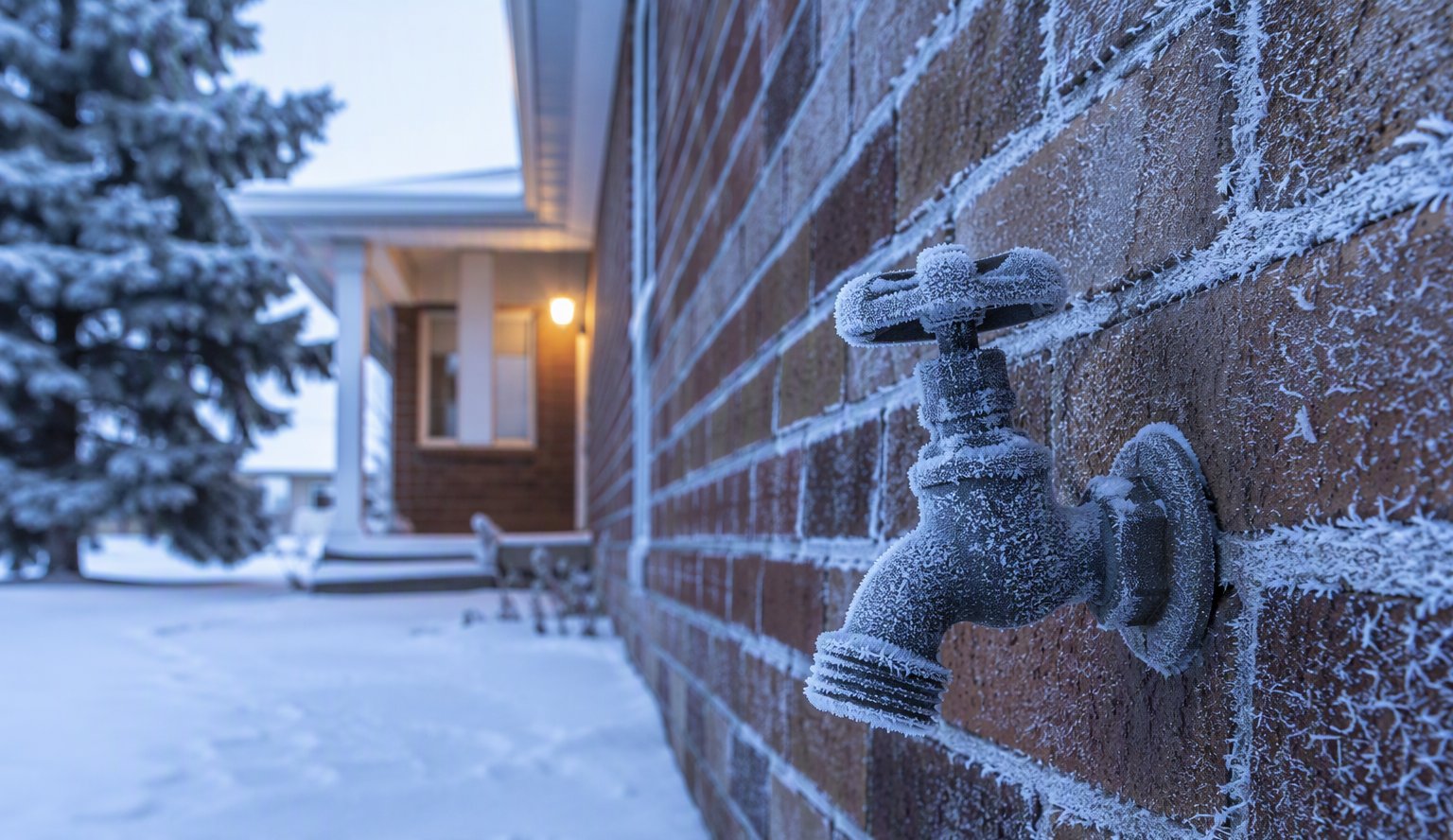
- Disconnect every hose. A connected hose traps water in the spigot body — the classic split-pipe-in-March scenario.
- Cover or insulate exposed spigots if your home doesn’t have frost-free sillcocks (many older Aurora homes don’t).
- Shut down and cover the AC condenser’s top if you use a cover — but never wrap the sides airtight; trapped moisture corrodes the coil.
- Clear leaves from the condenser base so snowmelt drains instead of refreezing around the unit.
Inside: the furnace
- Replace the filter. The first cold snap is the worst time to discover a clogged filter — restricted airflow overheats heat exchangers and trips limit switches.
- Test-run the heat now, on a mild afternoon. If the igniter is weak or the flame sensor is dirty, you want to know at 2 p.m. in October, not 2 a.m. in January.
- Check the CO detectors. Replace batteries, hit the test button, and make sure there’s one on every level. Heating season is CO season.
- Clear the area around the furnace. Storage drifted against the cabinet all summer is a fire hazard once burners light.
Thermostat strategy for freeze nights
Don’t crash the thermostat at night during extreme cold. Dropping to 60° overnight saves little and lets pipes in exterior walls and crawlspaces flirt with freezing. A steady, moderate setpoint is safer — and on the very coldest nights, let faucets on exterior walls drip slightly and open vanity doors to warm the wall cavity.
If the furnace quits anyway
First, the two-minute check: thermostat set to HEAT and above room temp, furnace switch on, breaker not tripped, filter not totally blocked. If all that’s fine and it’s still dead — call. No-heat calls go to the front of our dispatch queue, day or night.